



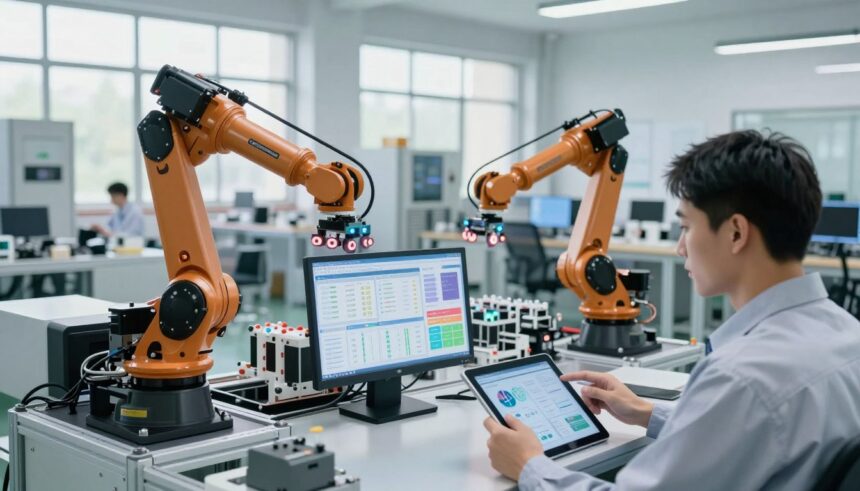
Imagine knowing a machine will fail days before it actually stops. This is now possible in the modern world of Industry 4.0. Smart companies use digital tools to watch their equipment and find hidden patterns.
By combining sensors and machine learning, a predictive maintenance strategy is built. This strategy helps managers avoid unnecessary repairs. It keeps the factory floor running smoothly without unplanned interruptions or costly delays.
Using big data analytics leads to better equipment uptime and improved product quality. You can see how hardware performs in real-time. This insight reduces the need for over-servicing and keeps costs low.
Modern digital tools change how we handle asset care. Instead of waiting for a crash, teams use facts to guide their choices. This shift ensures a safer and more efficient workplace for everyone involved.
Key Takeaways
- Anticipate equipment failures before they happen.
- Reduce unnecessary stoppages and factory downtime.
- Lower overall repair and long-term service costs.
- Improve the quality and consistency of finished products.
- Utilize real-time monitoring through smart hardware sensors.
- Drive operational efficiency using modern learning tools.
Understanding Predictive Maintenance in Industry
As industries move towards digital transformation, predictive maintenance becomes key. It’s a proactive method that uses real-time data and analytics. This helps predict when equipment might fail, so maintenance can be planned ahead.
What is Predictive Maintenance?
Predictive maintenance uses smart data to forecast equipment failures. It relies on IoT sensors and machine learning. This way, industries can move from old maintenance plans to a more efficient, condition-based approach.
Key components of predictive maintenance include:
- Real-time monitoring of equipment conditions
- Advanced data analytics and machine learning
- Integration with IoT technologies
- Proactive maintenance scheduling
Key Benefits of Predictive Maintenance
Predictive maintenance brings many advantages. It cuts downtime, extends equipment life, and saves costs. Studies show it can cut downtime by 30-50% and increase machine life by 20-40%.
Some main benefits are:
- Lower operational costs from less unplanned downtime
- More reliable and longer-lasting equipment
- Improved safety with early failure detection
- Optimized maintenance based on actual equipment condition
Industries that Benefit Most
Many industries see big gains from predictive maintenance. Those with complex, high-value assets and critical equipment benefit the most. Some top sectors include:
- Manufacturing: It reduces downtime and boosts equipment reliability, helping keep production on track.
- Energy and Utilities: It spots issues early in power equipment, lowering outage risks.
- Transportation: Airlines, railways, and logistics use it to keep fleets reliable and cut maintenance costs.
By using predictive maintenance, these industries see big boosts in efficiency, cost savings, and competitiveness.
The Role of Big Data in Predictive Maintenance
Big data is changing how industries work by giving them useful insights. It helps predict when equipment might fail, cuts down on downtime, and makes maintenance schedules better.
Defining Big Data
Big data is a huge amount of data, both structured and unstructured, that companies collect. For predictive maintenance, it includes data from sensors, maintenance records, and how things are running.
Key characteristics of big data include:
- Volume: The huge amount of data made
- Velocity: How fast data is made and processed
- Variety: The different kinds of data (structured, unstructured, semi-structured)
How Big Data Enhances Predictive Maintenance
Big data makes predictive maintenance better by showing how equipment is doing and when it might fail. It uses advanced analytics and machine learning to spot patterns and oddities that might mean equipment is about to break down.
| Benefit | Description |
|---|---|
| Improved Accuracy | More accurate predictions of when equipment will fail |
| Reduced Downtime | Maintenance can be done when it’s less busy |
| Cost Savings | Less need for emergency fixes and parts |
Using big data analytics, industries can create a better predictive maintenance strategy. This strategy reduces downtime and boosts how well things run.
Technologies Driving Predictive Maintenance
New technologies are changing how we do equipment maintenance. They make it more proactive and efficient. This is a big deal for industries.
At the center of this change are IoT and sensor technologies. They collect data from equipment in real-time. Then, machine learning algorithms analyze this data to predict when things might break. Cloud computing solutions help store and analyze all this data.
IoT and Sensor Technologies
IoT and sensors are key for predictive maintenance. They keep an eye on things like temperature and vibration. This lets us spot problems early, avoiding sudden breakdowns.
Machine Learning Algorithms
Machine learning is important for understanding sensor data. It finds patterns that humans might miss. This way, it helps us know when to do maintenance, cutting down on downtime.
Cloud Computing Solutions
Cloud computing is great for handling big data from IoT devices. It lets companies use advanced analytics without buying a lot of hardware. This is a big cost-saver.
Using these technologies together helps companies maintain their equipment better. It makes operations more efficient and saves money by avoiding unexpected downtime.
Data Sources for Predictive Maintenance
To have a good predictive maintenance strategy, knowing the data sources is key.
The main data sources are industrial equipment sensors, past maintenance records, and outside data. These help give a full picture of how equipment is doing.
Industrial Equipment Sensors
Industrial equipment sensors are a big help for predictive maintenance. They give live data on how well equipment is working. This lets companies spot problems early.
These sensors watch things like temperature, vibration, and pressure. They tell us how well machines are running.
Historical Maintenance Records
Historical maintenance records are also very important. They show what maintenance has been done before. This helps teams see patterns and trends.
Looking at past data helps teams predict when equipment might fail. They can then plan maintenance to avoid big problems.
External Data Sources
External data sources also play a role in predictive maintenance. This includes things like weather data, data from other places, or industry standards.
Outside data adds more information. It helps companies understand what affects equipment performance.
Using all these data sources helps companies create a strong predictive maintenance plan. This plan reduces downtime and boosts efficiency.
Challenges in Implementing Predictive Maintenance
Predictive maintenance offers many benefits but comes with challenges. It needs careful planning to fit into current systems.
The main hurdles include data integration, cost, and skill gaps. Overcoming these is key to making predictive maintenance work.
Data Integration Issues
One big challenge is combining data from different sources. This includes sensor data, maintenance records, and outside data. Data integration issues can happen because of format and system differences.
- Incompatible data formats and protocols
- Lack of standardization across different systems
- Difficulty in merging data from diverse sources
To solve these problems, companies can use standard formats and invest in integration tools. They should also have strong data policies.
Cost Considerations
The cost of predictive maintenance tech can be a big hurdle. This includes the price of sensors, software, and training. Cost considerations are important for deciding if a project is worth it.
Doing a cost-benefit analysis can show if predictive maintenance is a good investment. It looks at the costs against the savings from less downtime and longer equipment life.
Skill Gaps and Training
For predictive maintenance to succeed, you need skilled people. Skill gaps can slow down its adoption.
Companies can fill skill gaps by training current staff and hiring new talent. Keeping up with training ensures the team can handle predictive maintenance’s needs.
Best Practices for Predictive Maintenance
For predictive maintenance to work well, certain best practices are key. These practices help ensure that maintenance efforts are effective. They also boost overall operational efficiency.
Creating a Robust Data Strategy
A solid data strategy is vital for predictive maintenance success. It means data collection and analysis must match maintenance goals.
Here are the main parts of a robust data strategy:
- Identifying the right data sources, like equipment sensors and past maintenance records.
- Using good data management to keep data quality and integrity high.
- Applying advanced analytics to get insights from the data.
By focusing on these areas, companies can build a data strategy that supports their predictive maintenance goals.
Establishing Key Performance Indicators (KPIs)
Choosing the right KPIs is key to measuring predictive maintenance success. KPIs give a clear way to see if maintenance efforts are working as planned.
Some important KPIs for predictive maintenance are:
- Mean Time Between Failures (MTBF): Shows how reliable equipment is by measuring time between failures.
- Mean Time To Repair (MTTR): Measures how fast equipment is fixed after a failure, showing maintenance efficiency.
- Overall Equipment Effectiveness (OEE): Looks at availability, performance, and quality to judge equipment effectiveness.
Continuous Improvement Culture
Building a culture of continuous improvement is vital for predictive maintenance success. It means always learning and improving maintenance practices.
- Encouraging feedback from maintenance staff and others.
- Updating predictive maintenance plans regularly with new data and insights.
- Investing in training and development for maintenance team members.
By following these best practices, companies can improve their predictive maintenance. This leads to big operational benefits.
Real-World Examples of Predictive Maintenance
Predictive maintenance has changed the game for many industries. Companies like Boeing, General Electric, and Siemens are leading the way. They’ve seen big improvements in efficiency and cut costs.
Case Study: Boeing
Boeing is a top name in aerospace and a leader in predictive maintenance. They use advanced analytics and machine learning. This helps them predict when equipment might fail, cutting down on unplanned downtime.
Boeing’s move to predictive maintenance has brought:
- 20% less in maintenance costs
- 15% more equipment uptime
- Better overall productivity
Case Study: General Electric
General Electric (GE) is another pioneer in predictive maintenance. They combine IoT sensors with data analytics to keep an eye on equipment health. This way, they know when maintenance is needed.
GE’s approach has led to:
| Metric | Improvement |
|---|---|
| Maintenance Cost | 25% reduction |
| Equipment Uptime | 12% increase |
| Productivity | 10% improvement |
Case Study: Siemens
Siemens, a global leader in industrial manufacturing, has also adopted predictive maintenance. They use big data analytics to watch over equipment performance. This has greatly reduced unplanned downtime and maintenance costs.
- Reduced unplanned downtime by 30%
- Lower maintenance costs thanks to better scheduling
- Improved product quality and reliability
These examples show how predictive maintenance works in different industries. Companies that use it save a lot of money, work more efficiently, and make better products.
Future Trends in Predictive Maintenance
The world of predictive maintenance is about to see big changes thanks to new tech. As companies move towards digital transformation, they will use the latest tech to change how they do predictive maintenance.
New tech is making predictive models more accurate and efficient. Artificial intelligence (AI) and machine learning are leading this change. They help analyze lots of data to find patterns that humans might miss.
Advancements in AI and Machine Learning
AI and machine learning are key to predictive maintenance’s future. They help analyze huge amounts of data to spot patterns humans might miss. This makes predictive maintenance systems more accurate over time, cutting down on false alarms and making things more reliable.
Experts say AI and machine learning are not just trends; they’re essential for staying competitive. This shows how important it is to use these technologies to stay ahead.

The Growing Role of Edge Computing
Edge computing is also playing a big role in predictive maintenance’s future. It processes data near where it’s made, cutting down on delays and making analysis faster. This is key in industries where quick action can save a lot of money.
Edge computing helps with faster data handling, quicker decision-making, and less bandwidth use. As more data comes from industrial equipment, edge computing will become even more important.
New Regulatory Standards
Predictive maintenance is also facing new rules and standards. These changes aim to make sure predictive maintenance tech is used safely and effectively. Companies need to keep up with these changes to avoid fines.
By keeping up with trends and new rules, businesses can make the most of predictive maintenance. They can also avoid risks.
Conclusion: Embracing Predictive Maintenance and Big Data
As industries grow, using predictive maintenance and big data is key to staying ahead. Big data helps unlock new ways for growth and better efficiency. This is important for any organization.
Implementation Strategies
To start with predictive maintenance, first look at your current practices. See where you can get better. Then, add predictive tech and train your team well.
Getting predictive maintenance right needs a smart plan. Use big data to make better maintenance choices.
Achieving Long-Term Benefits
Predictive maintenance brings big wins like saving money, making equipment last longer, and working better. It cuts downtime and makes things last longer. This boosts productivity a lot.
Big data is key in making predictive maintenance work. Companies that use it will do well in the future.
FAQ
How does predictive maintenance big data work in the modern industrial landscape?
It works by gathering lots of data from machines through sensors. Then, big data analytics finds patterns in this data. Companies like General Electric use this to predict problems before they happen. This way, they can fix things before they break down.
What are the primary predictive maintenance benefits for manufacturing firms?
The big wins are less downtime, longer equipment life, and lower labor costs. By not waiting for things to break, companies save money and keep workers safer.
Why is IoT predictive maintenance considered a game-changer for Industry 4.0?
A: IoT predictive maintenance uses smart sensors to watch machines all the time. It checks things like temperature and vibration. Then, predictive maintenance software sends alerts when it’s time for maintenance, not just on a set schedule.
What should be included in a successful predictive maintenance strategy?
A good plan needs clear goals, quality data, and a drive for improvement. Leaders like Boeing say it’s key to mix old maintenance records with new sensor data for better forecasts.
Which predictive maintenance solutions are best for large-scale global operations?
Big companies use big predictive maintenance solutions that use cloud computing and machine learning. Giants like Siemens help manage global operations and asset health from one place.
How does big data analytics improve the accuracy of equipment failure predictions?
A: Big data analytics can handle lots of data at once. It spots complex failure signs that humans might miss. This makes your predictive maintenance tools get better with more data.
What are the common challenges when adopting new predictive maintenance software?
Big challenges include high costs, data silos, and a lack of skilled people. Companies solve these by training staff and working with experts like General Electric.
Are there specific predictive maintenance tools recommended for the aviation and aerospace industry?
Yes, the aviation world needs advanced sensors and edge computing. Boeing uses top-notch predictive maintenance tools to check engine health in real-time. This lets ground crews prepare for repairs before the plane lands, making operations more efficient.
